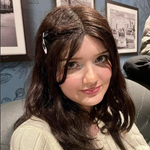
Phenomenal, vibrant, generous, funny, full of life and absolutely unforgettable is how the Walker family want people to remember their beautiful daughter, Sophie.
Sophie was born on 25 November, 2006 alongside her twin sister Megan, one of 10 children to Rebecca and James Walker. She sadly passed away in 2024 at the age of 17.
Today, Sophie’s parents, run a backpackers’ hostel in Edinburgh. Since losing Sophie, they have been trying to find a new direction for their family while creating a lasting legacy in her memory.
Scotland4kids spoke to Sophie’s dad, James about their experience of Childhood Cancer and what can be done to help families facing this journey.
Can you tell us a bit about Sophie, her interests and what type of child she was?
Although Sophie was an identical twin, she was absolutely unique. She was incredibly funny, full of energy and had a real zest for life. She wanted to live life to the full.
She was also enormously thoughtful and generous. She would go shopping for her brothers’ and sisters’ birthdays, choose their presents, make them cakes and genuinely cared about every one of them. She loved a party and loved being surrounded by the people she cared about.
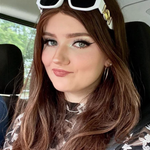
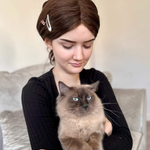
She loved Star Wars, Lego, cats, travelling, clothes and music. She had a brilliant and very varied taste in music.
I honestly cannot emphasise enough how special Sophie was. I’m sure every bereaved parent says that about their child, but it really is the truth. She had something about her that is extremely difficult to put into words.
Cancer was something that happened to Sophie. It was never who Sophie was. She was our daughter, Megan’s identical twin, a sister, a friend and an absolutely phenomenal young woman.
When did her diagnosis come about and how did the family and Sophie manage it?
Sophie was diagnosed with Wilms’ tumour in October 2017. She went through her first course of treatment, including surgery and chemotherapy, and afterwards we were told the treatment had been successful and Sophie was cured.
We then had a substantial disease-free period, roughly 16 months after treatment, where we genuinely believed cancer was behind us. In January 2020 Sophie suffered her first relapse, in the area of the original biopsy tract in her back. She went through another course of treatment and once again we were given the clear impression that she had been successfully treated and cured.
We then had another period of remission, roughly another year or so, before Sophie found another lump in her back. In December 2021 she suffered her second relapse. This led to further surgery and much more intensive treatment.
Unfortunately the disease progressed again in May 2022. Further treatments followed and later that year Sophie underwent high-dose chemotherapy. Even through that extremely intensive treatment, we were still being given the expectation that this was going to cure her.
Then, in spring 2023, Sophie suffered a third major recurrence. Surgery in April found further Wilms’ tumour involving the diaphragm and pleural area. That chronology is extremely important to us because Sophie was not simply fighting what we understood to be terminal cancer continuously from 2017 until 2024.
There were repeated periods where we believed she had been cured because that is what we were being told. We were continually reassured that this was “only Wilms’”, that it was something her consultant dealt with routinely and that Sophie was going to have a long and healthy life.
That shaped the decisions we made.
We did not spend those earlier years desperately searching around the world for second opinions because we did not understand that we needed to. We trusted the medical advice we were being given. Had we understood much earlier how serious and increasingly difficult Sophie’s disease was becoming, we would have approached things very differently.
Did Sophie feel supported through this time and what did her treatments entail?
Sophie was enormously supported by her family, but for many years she also had enormous trust and confidence in her consultant who would often spend a lot of time with Sophie and us when we were in hospital. They repeatedly reassured us with words to the effect of, “It’s only Wilms’, I’ve got this, this is my bread and butter,” and that nobody else needed to be involved.
Sophie believed her. We all did. That relationship is important because Sophie genuinely believed the consultant was going to get her through this.
Over the years Sophie went through chemotherapy, major surgery, radiotherapy, further surgery, more chemotherapy and eventually high-dose chemotherapy. She endured an extraordinary amount.
Towards the later stages, however, that trust began to break down. At one point Sophie’s chemotherapy was stopped after we were told that scans showed significant progression, including disease in her right lung.
We sought a private specialist opinion at Harefield Hospital. The specialist reviewed the same imaging and gave us a materially different interpretation, including telling us there was not disease in the right lung in the way we had been led to believe.
I remember Sophie questioning what she had been told. As Sophie’s situation became increasingly serious, we also became deeply concerned about the difficulties we experienced in trying to obtain wider specialist opinions, clinical trials and other possible treatment options.
From our perspective, doors seemed to be closing at precisely the point when we most desperately needed wider expertise.
One of the things that troubles me most is that Sophie had been given enormous confidence and hope for years, but when her condition became truly critical we did not feel there was the same determination to look outside the existing team and explore every meaningful option for keeping her alive.
Can you tell us about her last few months?
The last few months of Sophie’s life were incredibly difficult. Looking back, Rebecca and I were probably surviving almost entirely on adrenaline. We were contacting people across the world, looking for specialists and asking anybody we could for help because we still believed somebody with the right knowledge might be able to cure Sophie, control the disease or at least give her meaningful additional time.
Unfortunately her cancer was also becoming increasingly resistant to treatment. We felt conventional options were disappearing, and because we did not feel enough alternatives were being offered to us, we began desperately trying to find treatments ourselves.
Out of fear and desperation we took Sophie to Germany for TACE treatment. Looking back, I do not believe that was the right decision for Sophie and I worry that it may have shortened her life. That is something I have to live with.
But we were parents trying desperately to save our daughter when we felt the options being offered to us were disappearing. Later Sophie became unwell with what she described as a stomach bug. We did not feel enough was being done about it, so again we sought help elsewhere.
At a clinic in Manchester Sophie was given intravenous antibiotics. During that treatment she was also given DMSO and 50 grams of intravenous vitamin C. The following day she ended up in hospital in England and very quickly became dramatically more unwell. Within days she developed paralysis.
We became extremely concerned that the infusion may have contributed to this sudden deterioration. From that point, however, we felt the hospitals increasingly viewed almost everything that happened to Sophie as simply terminal cancer.
We did not see it that way.
After Sophie returned to Edinburgh she developed severe ascites. Her abdomen became enormously swollen, her breathing became extremely laboured, she needed very high levels of oxygen and her oxygen saturations were falling into the 80s.
I remember sitting beside her watching my daughter struggling to breathe and repeatedly asking for doctors to come.
I kept saying that I did not believe the tumour could possibly have grown enough within such a short period to explain what I was seeing. I believed the fluid itself was putting enormous pressure on her body and needed to be dealt with.
Eventually further imaging confirmed there was a significant amount of fluid. We asked for it to be drained but were told drainage was considered too dangerous.
Instead Sophie was given an intravenous diuretic. After one dose she passed more than a litre of urine. Her stomach became noticeably softer, her oxygen saturations improved and, for a period while the diuretics were working, we could physically see her improving.
For us, that was incredibly significant. Sophie only had one kidney following her earlier cancer treatment, and I was extremely worried about how long that kidney could cope with powerful diuretics.
Eventually there came a night where she received the medication and virtually no urine came out. From my perspective, that felt like the moment we had lost the only means we had been given to control the ascites.
What happened alongside this was equally distressing. Sophie repeatedly said she was not in pain and did not want morphine or a continuous syringe pump. She would become upset and ask why people were not listening to her.
We felt the palliative-care approach had become overwhelmingly focused on sedation. I found myself arguing with the palliative-care nurses because we were looking at Sophie’s situation very differently.
We were still asking for investigation, treatment and relief of what we believed were potentially treatable problems. It felt to us as though the medical team had already decided that Sophie was dying and that sedation was essentially all that remained. Even the night before Sophie died, we asked for a doctor to come and see her and were told no doctor was available.
I also contacted a hospice myself because I was so concerned about what was happening. The person I spoke to was sufficiently concerned by what I described that an adult end-of-life doctor from the Royal Infirmary came to see Sophie.
I was told that I should not have been having to coordinate and advocate for Sophie’s care in that way myself. It should already have been done for her.
Sophie died on 6 July 2024. She was 17 years old. Watching our daughter die was horrific.
What makes it particularly difficult is our continuing belief that Sophie was not being listened to and that deterioration which we felt deserved investigation and treatment was too readily attributed solely to terminal cancer.
I cannot say with certainty which interventions would ultimately have changed the outcome. What I can say with certainty is that Sophie wanted to live. She wanted to be heard.
And as her parents we felt we were constantly having to fight for somebody to investigate what was happening to her and help her. That experience forms a major part of the complaints we continue to pursue.
How does Sophie’s legacy live on?
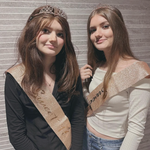
Sophie’s legacy lives on first and foremost through her family and particularly through Megan, her identical twin sister. Megan suffers the loss of Sophie in a way I don’t think anybody else possibly could. They came into this world together, grew up together and had a bond that was completely unique.
Rebecca wants me to write a book about Sophie, and I want that too. I believe Sophie’s story needs to be told, both because of the extraordinary person she was and because the devastating circumstances surrounding her treatment and death need to be heard, acknowledged and learned from.
I never want Sophie’s legacy simply to be that she was “a cancer kid”. Cancer was something that happened to Sophie. It was never Sophie. We have raised very serious concerns about her treatment and what we believe were failures in her care, including matters which we believe may amount to medical negligence. Those complaints and processes remain ongoing.
Until we have proper answers, I don’t think the final chapter of Sophie’s story has been written.
My hope is that eventually Sophie’s legacy reaches far beyond our own family and even beyond our own lifetimes. I want her name and her story to mean something.
If what happened to Sophie results in greater accountability, better treatment, better end-of-life care or simply makes another doctor stop and properly listen to a child and their parents, then something lasting will have come from something that should never have happened.
But her legacy also has to reflect Sophie herself. Her joy, vibrancy, generosity, humour, attitude and incredible zest for life. I want somebody hearing Sophie’s story to think, “What an absolutely extraordinary girl,” but also, “What happened to that girl should never have happened.” Both parts matter.
Why is it important to raise awareness about childhood cancer?
Childhood cancer is largely hidden from everyday life. It is statistically described as rare, but when you actually spend years around a children’s cancer service it does not feel rare. Most people understandably do not want to contemplate children getting cancer. It is easier to believe it is something that happens to somebody else’s family.
But it really can happen to your child, your grandchild, your niece or nephew, or another child you love. And believe me, if it does, you will want that child to have access to the very best treatment, expertise and every possible chance of surviving. Because when a child dies, it doesn’t end with that child.
It changes the parents forever. It changes brothers and sisters. It changes grandparents, friends and an entire family. We experience that every day following Sophie’s death. I think society sometimes puts childhood cancer out of sight because it is simply too painful to contemplate.
But looking away does nothing for these children. We need greater awareness, more research, better treatments and greater investment in specialist childhood cancer care. Huge amounts of work and money rightly go into cancers affecting adults, and of course that should continue.
But children deserve that same urgency. My feeling is very simple: give these children every possible chance to grow up and become those adults in the first place.
How can our readers get involved to help?
My answer is probably a little different from the usual one. Because of our own experiences I have reservations about simply telling people to give money to a huge national charity and assume that money is reaching children and families directly. I have asked questions myself about where money goes and what tangible help reaches families, and I have not always been satisfied with the answers.
I would encourage people to look locally and look directly. If you know a child with cancer, do something for that child. Do something for their brothers and sisters. Do something for their mum and dad.
Take them somewhere. Cook them a meal. Help with transport or childcare. Buy the child something they love. Help the family financially if you are able to. Sometimes simply turning up and showing them they haven’t been forgotten means an enormous amount.
Alternatively, look at smaller local organisations that are actually working directly with families and ask what they do. Ask questions before donating. Look at where the money goes and what difference it actually makes on the ground. Families facing childhood cancer do not just need awareness campaigns. Their lives have been turned upside down and they need practical help.
Sometimes doing one meaningful thing directly for a family can make more difference than people realise.