
Every Friday, Twinkl Scotland will be discussing a new theme for Scotland4kids and S4k Teachers’ Edition readers. This weeks theme is Probationers.
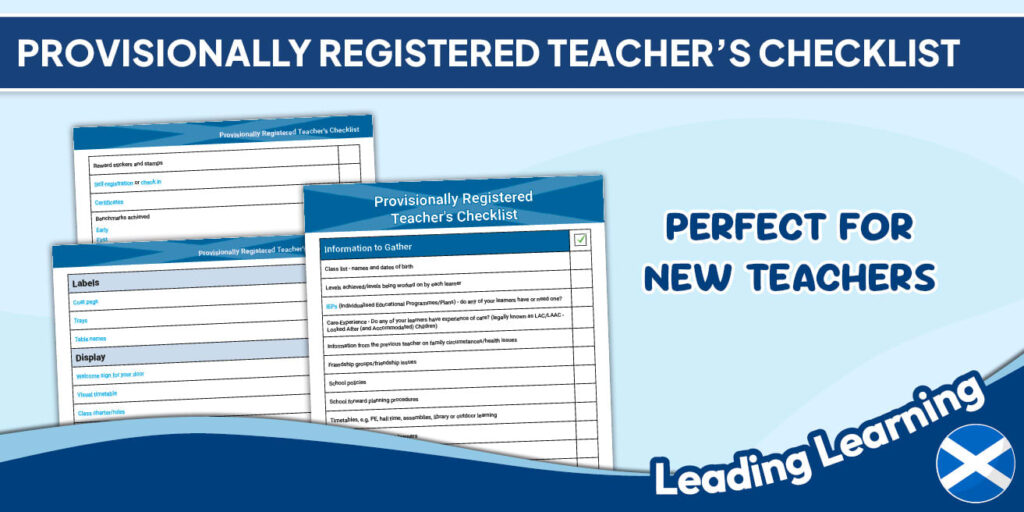
Scotland is officially phasing out the term probationer in favour of a new title: Provisionally Registered Teacher (PRT). While the structure of the Teacher Induction Scheme (TIS), including your timetable and entitlement to support, remains unchanged, this shift in language reflects a growing recognition of PRTs as valued professionals at the beginning of their teaching careers.
More Than a Name Change: Why You Are a Provisionally Registered Teacher From Day One
Congratulations on completing your Initial Teacher Education (ITE) and securing a place on the Teacher Induction Scheme (TIS). Whether you have been placed in a bustling city school or a rural setting, this year marks an important stage in your professional journey as you work towards moving from Provisional Registration to Full Registration.
Recently, you may have noticed a subtle but deliberate change in how we talk about early career educators. The term probationer, long embedded in educational vocabulary, is gradually being phased out. In its place, the General Teaching Council for Scotland (GTC Scotland) is establishing a new designation: Provisionally Registered Teacher (PRT).
At first glance, a change in terminology might seem like a purely administrative decision. However, this shift carries important professional significance. Understanding why the language has changed, the support available to you and what remains unchanged within the Teacher Induction Scheme can help you make the most of your induction year with confidence.
Click here for more information.
Asking for Support As a Probationer
It’s ok to ask a million questions during your probation year and remember it’s okay not to be okay. This blog will help you consider how you can approach others for support and how you can prioritise your own wellbeing during this challenging time.
It’s ok to ask a million questions during your probation year and remember it’s okay not to be okay. This blog will help you consider how you can approach others for support and how you can prioritise your own wellbeing during this challenging time.
“Don’t be afraid to ask questions. Don’t be afraid to ask for help when you need it. I do that every day. Asking for help isn’t a sign of weakness, it’s a sign of strength. It shows you have the courage to admit when you don’t know something and to learn something new.” – Barack Obama
Asking for help
Firstly, congratulations on all of your hard work so far. It’s been such a strange year and we have had to deal with more challenges now than ever. I hope you have enjoyed the start of your probation year. You’ve achieved so much and undoubtedly worked so hard to get here.
As you reflect on this term and the year as a whole, take some time to reflect on all your achievements as well as how you wish to progress. Reflect on the questions you have, the things that have gone well, the things that could have gone better and the things you want to achieve. Is there anything you need help with or want clarified? Take the time with your mentor to ensure that you ask these questions.
Remember that asking for help is not a sign of weakness; asking for support or help is a show of strength and the only way we learn.
The coming term will be a busy, long and challenging time (I’m sure you really wanted to hear that!) and with the current situation changing frequently it’s ok to reach out for support.
So, how do you ask for help?
- Be honest about needing support. No one expects you to have all the answers and they won’t think any less of you for reaching out.
- Find a colleague or friend that you trust. You can ask anyone, but if your nerves get in the way find someone you can have an open conversation with.
- Ask the questions you really want the answer to. Some questions may be tricky to ask but don’t avoid them, as it won’t help in the long run.
- Make a note of things as they come up. It may be that you think of something mid-lesson but by the time you can ask about it you might have forgotten. Keeping a small notebook for questions will help you keep track.
- Become comfortable with confronting your emotions. Are you sure you are ok? Is there something that is bothering you or worrying you? Write things down if you need to think them through before you talk to somebody about them.
- Look for your own solutions. Sometimes trying to work out your own solutions and discussing your thoughts with others is enough to answer your questions.
Self-care is not a luxury it’s a necessity
Teachers are often guilty of putting everything they can into their work and forgetting to put aside time for themselves. It’s vital that you do look after yourself – take time out when things are hard and remember you’re allowed to celebrate your wins no matter how big or small. There’s no shame in admitting that you need a break and time away from a challenge can often help you solve it when you return to it.
Some ideas for self-care:
- Talk a walk
- Do a workout
- Chat with friends or family
- Engage in some mindfulness activities
- Have a bath
- Prepare and enjoy a nice meal
- Relaxation time
Find a time and activity that works for you and plan it into your schedule in advance. Be strict with yourself and try to allow yourself some downtime most days.
This year has been exhausting and at times even the most experienced teachers will have needed support. Nobody expects you to do this all on your own – ask the twenty questions, suggest solutions and take care of yourself. We are all in this together, so let’s work together and provide the best experience we can for our learners.
Helpful Resources:
Teachers! Click the links below for access to Twinkl resources:
4 x Probationer Resources
| https://www.twinkl.co.uk/r/vvsu9 |
| https://www.twinkl.co.uk/r/1icbc0 |
| https://www.twinkl.co.uk/r/13fqhl |
| https://www.twinkl.co.uk/r/va074 |
4 x Teacher Resources