Every Friday, Twinkl Scotland will be discussing a new theme for Scotland4kids and S4k Teachers’ Edition readers. This weeks theme is safeguarding as a refresher for the new school year.
Author: Adrian Anderson Educational Content Lead – Leading Learning (Scotland)
This blog provides a comprehensive overview of Safeguarding within the GIRFEC framework in Scottish schools. It explores the professional duty of all staff to notice, record and share concerns, while offering deep dives into critical areas such as Adverse Childhood Experiences (ACEs), Domestic Abuse and Online Safety.
In Scotland, safeguarding is more than a reaction to harm. Under the Getting It Right for Every Child (GIRFEC) framework, safeguarding is woven into the fabric of everyday school life. Whether you are a teacher, a member of support staff or a volunteer, you play a vital role in ensuring children are safe, healthy and achieving.
What Does Safeguarding Look Like?
Safeguarding isn’t just about responding to crises. It involves:
-
- noticing changes in a child’s mood, attendance or appearance
-
- creating nurturing environments where children feel safe to speak
-
- recording concerns factually and promptly
-
- sharing information with your Designated Safeguarding Lead (DSL) or Child Protection Coordinator (CPC)
At the heart of GIRFEC are the eight indicators of wellbeing. We must ask whether the child is Safe, Healthy, Achieving, Nurtured, Active, Respected, Responsible and Included.
Effective safeguarding is built upon a foundation of clear, localised governance. Therefore, every educational setting is required to maintain its own specific safeguarding procedures and policies that align with national GIRFEC guidance. Central to this structure is the identified Child Protection Coordinator (CPC) or Designated Safeguarding Lead, who acts as the primary point of contact for all concerns.
It is not enough for these policies to simply exist on a shelf; they must be deeply understood and consistently followed by every member of the community to ensure that no child falls through the gaps. To achieve this, schools must prioritise dedicated time for robust staff training and professional development. Ongoing training ensures that practitioners remain confident in recognising emerging risks and are fully fluent in the protocols unique to their specific establishment.
To support a consistent understanding, we have developed a suite of resources to share the important messages concerning safeguarding. Our Safeguarding in Scottish Schools Poster is a good starting point.
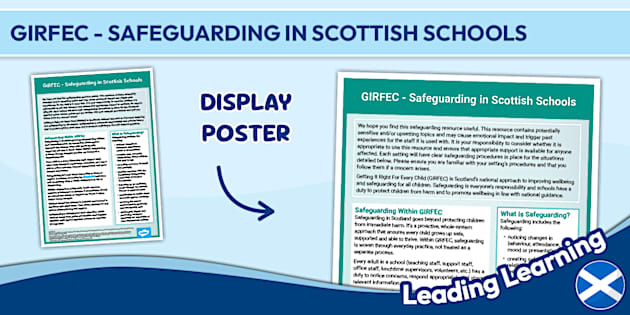
GIRFEC – Safeguarding in Scottish Schools Poster
Recognising the Signs: A Professional Duty
Abuse and neglect often manifest in subtle ways. Understanding the signs of abuse is the first step toward intervention. Identifying the specific markers of harm requires a vigilant, holistic approach to a child’s presentation and environment.
Physical and sexual abuse often manifests through visible, unexplained injuries like bruises or burns but can also be signalled by a child’s sudden fear of physical touch or the acquisition of sexual knowledge that is developmentally inappropriate.
In contrast, neglect is frequently identified through persistent physical cues such as a child consistently arriving in dirty or weather-inappropriate clothing, showing signs of untreated medical issues or experiencing chronic hunger and poor hygiene.
Safeguarding also extends to complex forms of exploitation and influence. Criminal or sexual exploitation may be hidden behind the sudden possession of unexplained money, expensive gifts or multiple mobile phones, often accompanied by increased secrecy regarding their whereabouts or peer groups. Similarly, radicalisation presents through behavioural shifts, where a child might adopt extremist vocabulary, begin justifying violence to address political or social grievances or show a marked change in online habits such as accessing propaganda or using multiple digital identities.
In all cases, these indicators serve as vital signals that a child’s wellbeing is at risk, necessitating immediate recording and reporting through established safeguarding pathways.
Our signs of abuse poster is a great resource to support staff in identifying potential dangers and seeking help when needed. It promotes a safe and supportive learning environment where every child’s wellbeing is a top priority.
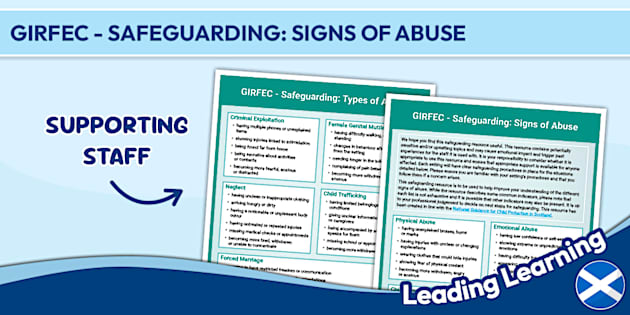
GIRFEC – Safeguarding: Signs of Abuse Poster
Understanding Adverse Childhood Experiences (ACEs)
Growing up with prolonged stress such as domestic violence, parental separation or substance misuse can disrupt healthy brain development. When a child exists in a state of constant high alert due to domestic instability or loss, their body’s survival systems, the fight, flight or freeze responses, remain permanently activated. This prolonged exposure to cortisol and adrenaline can physically alter the architecture of the developing brain.
In a classroom or social setting, these biological changes often translate into behaviours that are easily misunderstood. A child who is hyper-vigilant may react aggressively to a minor accidental bump in the hallway, perceiving it as a physical threat. A child might zone out or become non-responsive (dissociation) as a way to mentally escape overwhelming stress.
By adopting a trauma-informed lens, we shift the internal question from, “What is wrong with this child?” to, “What has happened to this child?” This perspective recognises that:
-
- Behaviour is communication: Outbursts or withdrawal are often the only tools a child has to signal they feel unsafe or overwhelmed.
-
- Regulatory gaps: Children with ACE may lack the neurological wiring to calm themselves down without significant external support and co-regulation from a trusted adult.
-
- Relational repair: Because trauma often occurs within relationships, healing must also occur within relationships. Consistent, predictable and compassionate interactions help re-wire the brain to associate adults with safety rather than threat.
To further support understanding of ACEs, our Safeguarding: Adverse Childhood Experiences Poster is designed to equip teachers with the tools to identify and support children who may have experienced Adverse Childhood Experiences (ACEs). It aligns with GIRFEC principles, emphasising early intervention, wellbeing and multi-agency support, in which educators play a crucial role when safeguarding vulnerable children and promoting their overall wellbeing.
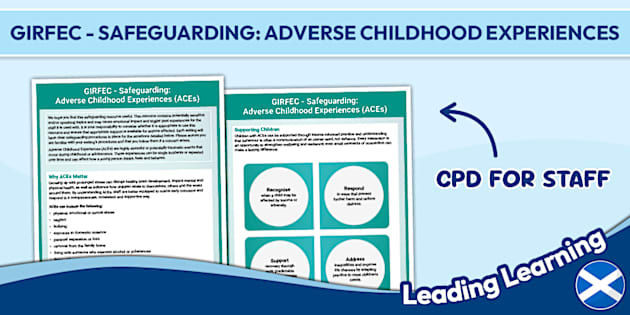
GIRFEC – Safeguarding: Adverse Childhood Experiences Poster
Domestic Abuse
The prevalence of domestic abuse is a sobering reality in modern education, with statistics from Education Scotland indicating that at least one child in every classroom is living with the shadow of abuse at home. This is rarely a one-off event; rather, it is a sustained pattern of coercive control, threats and psychological or physical violence that fundamentally violates a child’s right to feel safe and nurtured. For these children, the world is often unpredictable and frightening, meaning the role of the school environment shifts from mere academic instruction to an essential sanctuary.
Supporting these children begins with the creation of a trauma-informed environment. Because domestic abuse thrives on chaos and control, school staff can provide a vital counter-balance by establishing predictable routines that offer the child a sense of agency and safety. Modelling emotional literacy is key by helping children identify and name their complex feelings. As educators, through the wider Health and Wellbeing curriculum, we give children the tools to process experiences that are often beyond their developmental understanding.
When dealing with cases of domestic abuse, we need to ensure we follow the strict protocols that are in place to safeguard children. While the instinct to ‘fix’ the situation or challenge the adult can be strong, doing so is extremely dangerous and could significantly escalate the risk of harm to the child. Safeguarding is about following established multi-agency pathways. Your role is to remain a safe adult, record observations meticulously and share information immediately with your Child Protection Coordinator, allowing the police and social work services to manage the risk through legal frameworks.
Our Safeguarding: Domestic Abuse resource provides guidance on handling domestic abuse situations with care and sensitivity. By understanding the importance of a calm and caring response, you’ll create a safe space for children to share their concerns about domestic abuse.
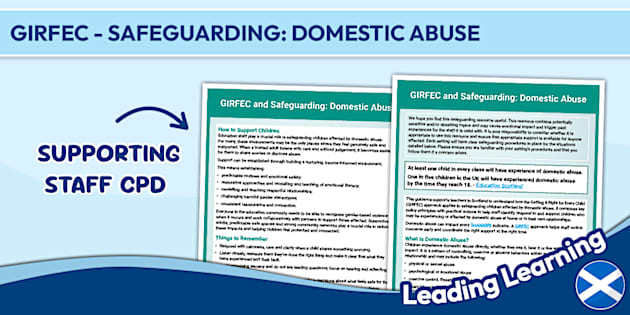
GIRFEC – Safeguarding: Domestic Abuse (Guidance)
Safeguarding in the Digital Age
While the digital landscape is a tool for creativity and global connection, it also presents complex, evolving risks that require a high degree of professional vigilance. Modern online harm is rarely isolated to a single platform. It can span social media, immersive gaming environments and encrypted messaging apps. Key threats include cyberbullying, which can be persistent and inescapable and grooming, where predatory individuals use manipulation and friendship to exploit children.
Staff must be aware of the grave legal and ethical implications of AI-generated Child Sexual Abuse Material (CSAM). Even if these images or videos are artificially created, they are treated under the law with the same severity as real-world imagery, as they cause profound harm to the dignity and safety of children everywhere.
Recognising when a child is in distress online requires a keen eye for behavioural shifts. You may notice a child becoming uncharacteristically secretive or protective of their devices, quickly closing tabs when an adult approaches or showing signs of physical agitation, withdrawal or sadness immediately after being online. In some cases, a child may experience sudden shifts in their peer groups.
When these red flags appear, the response phase of your safeguarding training is critical. However, we must remember that as education staff, it is not our job to investigate, search or scroll through a child’s device. While the intention may be to find evidence, searching a device can inadvertently contaminate digital evidence needed for police investigations, breach the child’s right to privacy or expose you to illegal material that could compromise your own professional standing.
Instead, your responsibility is to:
-
- notice the behavioural change or distress;
-
- record your observations factually;
-
- share the concern immediately with your Child Protection Lead or Named Person.
By following these established pathways, you ensure that the situation is handled by professionals equipped to manage digital forensics and child protection law, keeping both the child and yourself protected.
Detecting digital abuse within school gates presents unique challenges for educators because the most intense interactions often occur behind closed doors at home. In the classroom, a child’s digital life is filtered through school firewalls and supervised sessions. However, the true impact of grooming, cyberbullying or exposure to harmful content is frequently more visible in the home environment. Parents and carers are often the first to notice irritability, sudden refusal to come to dinner or physical exhaustion caused by late-night messaging and secret device use.
Because these risks often straddle the line between home and school, strong partnerships with parents and carers are the most effective defence. Safeguarding is a shared responsibility and schools must act as a hub for information and support. This collaborative approach should include:
Integrated Curriculum Sessions: Using the curriculum to build digital literacy and resilience.
Parent and Carer Workshops: Hosting sessions that demystify current trends, such as AI-generated content or specific gaming platforms, provides parents with the vocabulary to have open, non-judgemental conversations at home.
Two-Way Communication: Encouraging parents to share concerns about a child’s online behaviour helps the school’s Named Person or pastoral team spot patterns that might otherwise stay hidden.
Our Safeguarding: Online Safety Poster resource equips you with the tools to address cyberbullying, grooming and other online risks and how to respond effectively through child protection procedures.
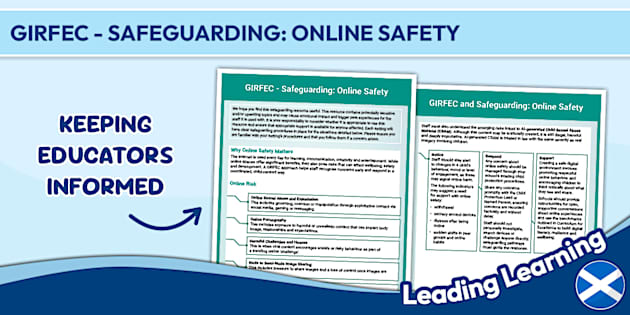
GIRFEC – Safeguarding: Online Safety Poster
Information Sharing
Protecting children depends on confident, timely and collaborative practice. If you recognise a child protection concern, it is vital that you act immediately. It is important that everyone is familiar with local child protection procedures, knows who the Child Protection Coordinator and Named Person are and has practised emergency information‑sharing through training and scenario exercises.
Blog continued here
Links to Twinkl Teaching Resources on Safeguarding:
https://www.twinkl.co.uk/resource/
https://www.twinkl.co.uk/resource
https://www.twinkl.co.uk/resource/what-i-need-to-know-about-contextual-safeguarding